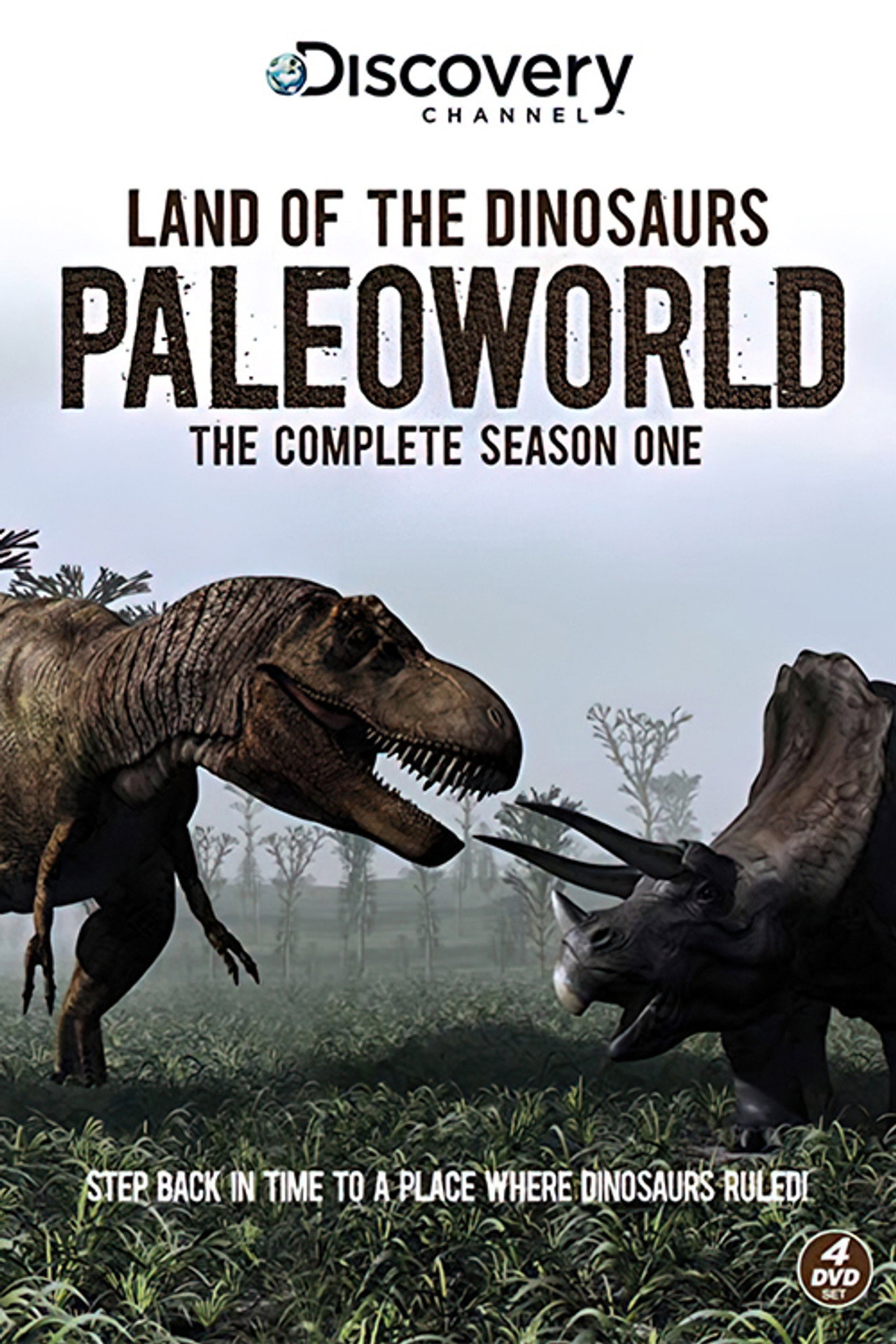
Paleoworld was a documentary television series that was produced for The Learning Channel, and has had a total of 50 episodes. Some consider it to be the largest and most comprehensive paleontology series ever made. The series began in late September 1994 and, after 4 seasons, ended in 1997. Each episode is approximately 24 minutes long.The series is now owned by the Discovery Channel, along with other documentaries such as Beyond T-rex, Valley Of The T-rex, Dinosaur Planet and When Dinosaurs Roamed America.Paleoworld currently airs on Science.
Episodes
4 seasons and 51 episodes so far
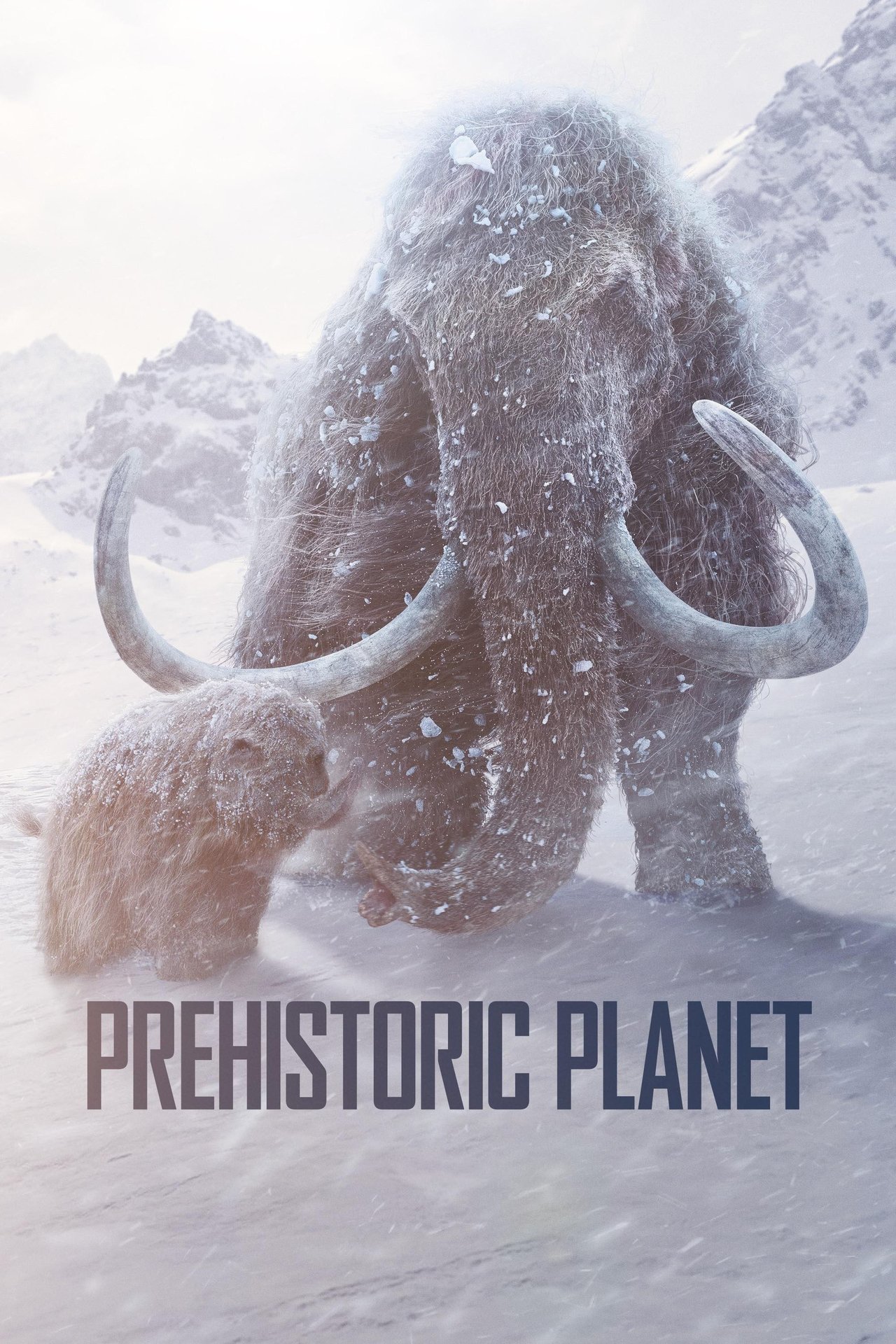
Prehistoric Planet2022Rating: 8.3 out of 10
Natural World1983Rating: 7.4 out of 10
Deadly Women2005Rating: 7.9 out of 10
Earth at Night in Colour2020Rating: 8.1 out of 10
MegaStructures2004Rating: 7.5 out of 10

Top Gear1978Rating: 8.0 out of 10
Nature1982Rating: 7.9 out of 10

Welcome to Earth2021Rating: 7.6 out of 10

Biography1987Rating: 6.7 out of 10
Secrets of the Penguins2025Rating: 7.6 out of 10
Great Migrations2010Rating: 7.7 out of 10
Life on Our Planet2023Rating: 8.1 out of 10
The Blue Planet2001Rating: 8.4 out of 10
Last Chance U2016Rating: 7.2 out of 10
JANET JACKSON.2022Rating: 7.5 out of 10
Walking with Dinosaurs2025Rating: 7.1 out of 10
Mind Field2017Rating: 8.2 out of 10
Inside Pixar2020Rating: 6.7 out of 10

NOVA1974Rating: 7.1 out of 10
Our Universe2022Rating: 7.8 out of 10Season 4, 36 episodes
Scientists unearth a dinosaur graveyard in New Mexico.
Human paleontology reaches back to find the origins of human kind. PaleoWorld explores how we survived, the gaps in our knowledge, and the twists, turns, and dead ends in our evolutionary pathway.
On the tip of South Africa in the Karoo basin is a treasure trove of fossils paleontologists believe to be from carnivorous dinosaurs. Re-created in vivid detail are the lives of these great creatures.
Study of the Troodon, one of the longest lived and most intelligent dinosaurs.
The rhino has existed five times longer than the average species. Trace the history of the rhino from its earliest relative, just four inches long, to a later one that stood over 33 feet high. At "Rhino Pompeii" in Nebraska perfectly preserved fossils can be found dating back 10 million years. There is no site in the world with this degree of preservation.
Scientists have unearthed details in the Montana Badlands, telling us how dinosaurs reared their young. Raised inside nests, the offspring of the duck-billed dinosaurs had to grow up quickly to fend off potential predators lurking in the shadows.
Behavior and migratory patterns of dinosaurs.
Of all the battles fought in the world of paleontology, few have the passion to rival that of modern man's ancestry. Does Neanderthal man live on in our genetic mix or was he an evolutionary dead end? For years paleontologists Milford Wolpoff and Chris Stringer have been tearing at the bones of this argument.
Most people associate mammoths with red-haired, shaggy-coated creatures that roamed the frozen steppes of Eastern Europe, disappearing during the Ice Age. How did they get there and why did they disappear? The mammoth site in South Dakota provides clues to the mysteries of the past.
When the first man walked on two feet it was a giant step forward. But how and why it happened has always been a mystery. Now new discoveries are revealing the story of how we evolved into apes that walked.
In the summer of 1995, PaleoWorld followed paleontologist Paul Sereno out to the Sahara to dig for dinosaurs. He came back with two remarkable finds: one, an almost complete body, was an entirely new species that had never been seen before. The other, an enormous skull, has proved to be the biggest predatory dinosaur in the world.
In the Sahara Desert, paleontologists search for clues to Africa's dinosaur past. The first team to explore this region in over 40 years, it hopes to find a giant sauropod or a new species of carnivore. Africa has long been geographically or politically inaccessible and has never been properly excavated. A team of paleontologists pick up the trail of Saharan dinosaurs and make revolutionary finds.
About rats on the island of Anguilla 120,00 years ago that there "three times the size of man."
Of all the dinosaurs that walked the earth, the Ceratopsian or horned dinosaurs are the best known. Thanks to freak catastrophes that stopped these dinosaurs in their tracks, paleontologists have a snapshot in time enabling them to unravel the inner world of dinosaur society.
Paleontologists are turning to this fossilized tree resin because it is a superb record of life on earth millions of years ago. It is also the only substance which preserves DNA from the time of the dinosaurs. Travel to hazardous amber mines deep in the mountains in the Dominican Republic, on a mission to find new life forms embedded in amber millions of years old.
From Godzilla, the fire-breathing film star of the 50s, to Sue, the latest and greatest Rex discovery of them all, these dinos were the perfect predators--or were they? The debate is ongoing, even as we learn more intimate details about this creature.
From the smallest notch on a giant fossil, paleontologists can infer the most amazing details of the long-missing parts of a dinosaur--nervous systems, vital organs, giant musculature, and even how well they can hear and see. High-tech medical equipment is now letting us see inside the head of a T. Rex and into the unhatched embryos of dinosaur eggs.
Dinosaurs flourished on every continent 65 million years ago. Then they vanished. Many incompatible theories have been developed to explain the dinosaurs' extinction.
Exactly how birds began to fly has always been a bit of a mystery. Scientists found 140 million-year-old fossils of the Archaeopteryx, which could glide for distances, but could not fly or land like modern birds. Now, three birds from about 115 million years ago have been uncovered in Spain. Have archaeologists uncovered the flying missing link?