Overview
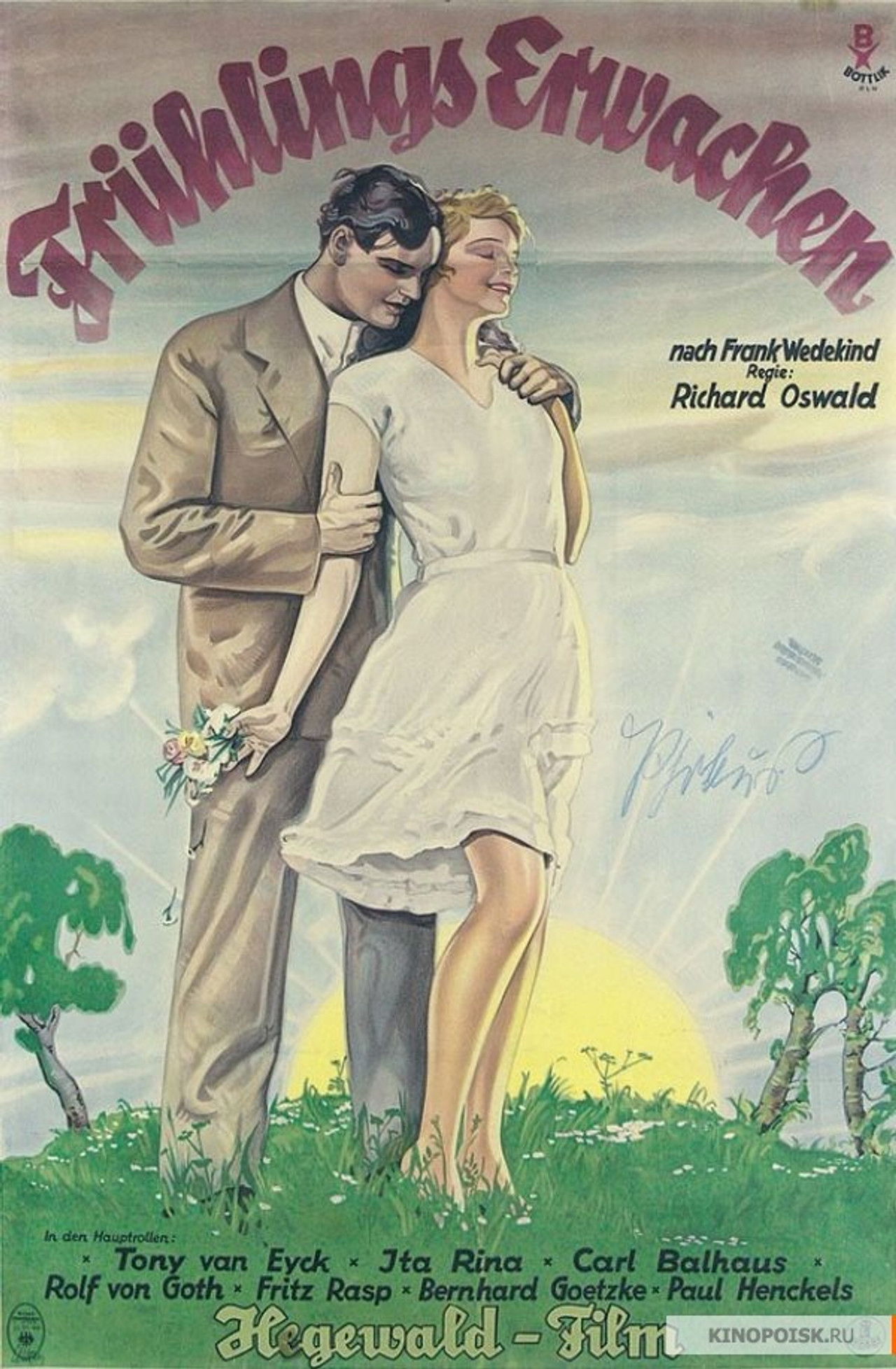
Moritz Stiefel faces expulsion due to poor marks. When he is caught with an essay titled “Shame and Lust”, he is indeed kicked out – instead of classmate Melchior Gabor, who actually penned it. Gabor was drawing on his experiences with neighbourhood girl Wendla. Then Wendla turns up pregnant. Stiefel descends into despair ... Exploitation between Eros and Thanatos in this “sexual tragedy of youth” based on Frank Wedekind’s play. Setting the film in the 1920s provided a chance to explore “modern” youth culture, complete with cigarettes, jazz music, the gramophone, and a goodly bit of alcohol. Richard Oswald, a master of films of manners and young sex beginning in the 1910s, fully explores the temptations of the youthful body, even early childhood flirtatiousness. At the same time, with his target audience in mind, the film laments the bigotry and double standards of the adult world.
Fun facts
- Source for Based on, opens in a new tab
Based on
Based on Spring Awakening
- Source for Music, opens in a new tab
Music
Music by Walter Ulfig
- Source for Cinematography, opens in a new tab
Cinematography
Cinematography by Eduard Hoesch
Details
- Director
- Writers
- Friedrich RaffScreenplay
- Herbert RosenfeldScreenplay
- Original title
- Frühlings Erwachen
- Status
- Released
- Release date
- January 1, 1929
- Original language
- German
- Countries
- Czechoslovakia, Germany
Production
Cast







More like this
 The German Lesson2019Rating: 6.5 out of 10
 In the Aisles2018Rating: 6.9 out of 10
 Hardball2001Rating: 6.5 out of 10
 In a Land That No Longer Exists2022Rating: 6.2 out of 10
 The Effect of Gamma Rays on Man-in-the-Moon Marigolds1972Rating: 7.3 out of 10
 Skin2009Rating: 6.4 out of 10
 Fog in August2016Rating: 7.4 out of 10
 Come Sunday2018Rating: 5.8 out of 10
 What Maisie Knew2013Rating: 7.1 out of 10
 Inside I'm Dancing2004Rating: 7.4 out of 10
 Eleanor the Great2025Rating: 6.8 out of 10
 Paula2016Rating: 6.3 out of 10
 The Carpetbaggers1964Rating: 6.0 out of 10
 Yellow Letters2026Rating: 7.2 out of 10
 Farming2018Rating: 6.2 out of 10
 All Day and a Night2020Rating: 6.2 out of 10
 Charm City Kings2020Rating: 7.8 out of 10
 Home Run2013Rating: 6.2 out of 10
 Pimp2018Rating: 6.2 out of 10
 May December2023Rating: 6.6 out of 10